
INSIGHTS
When it comes to digital marketing, pay-per-click (PPC) advertising and search engine optimization (SEO) are often treated as two separate strategies. Some businesses even pit them against each other, choosing one while ignoring the other entirely. But the truth is, PPC and SEO are strongest when they work hand-in-hand.
By combining the instant visibility of paid ads with the long-term growth of organic search, businesses can capture more traffic, generate better leads, and build lasting authority in their market. Keep reading to learn how each channel works individually, and why integrating them into your search marketing strategy leads to better results than using either one alone.
What Is PPC?
PPC, or pay-per-click advertising, is a model where you pay each time someone clicks on your ad. These ads typically appear at the top of search engine results, on social platforms, and across display networks. With platforms like Google Ads, PPC allows you to target specific keywords, demographics, locations, and behaviors to quickly drive qualified traffic to your site.
The biggest benefit of PPC is speed. You can launch a campaign and start seeing clicks and conversions almost immediately. It’s ideal for promotions, product launches, or capturing leads while building your longer-term organic traffic strategy.
What is SEO?
Search engine optimization is the practice of improving your website so it ranks higher in organic search results. Unlike PPC, SEO doesn’t involve paying for clicks. Instead, it focuses on creating valuable content, improving site structure, optimizing for keywords, and earning authority through backlinks and user trust.
SEO takes time to gain momentum, but the payoff is sustainable traffic that builds over months and years. It’s a foundational part of search engine visibility, helping your brand show up when people are searching for solutions you offer, even when you’re not actively running ads.
How PPC and SEO Support Each Other
When used together, PPC and SEO create a more complete and effective digital marketing strategy. Instead of working in silos, these channels can share insights, amplify results, and fill in gaps across the customer journey. From shared keyword data to broader visibility, the benefits of integrating these efforts can directly impact ad performance and marketing ROI.
Shared Keyword and Search Intent Data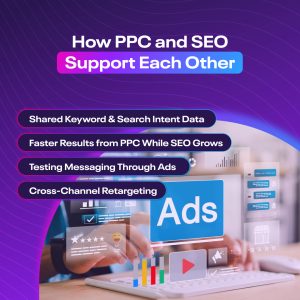
Both PPC and SEO rely on understanding how people search, and that makes keyword data incredibly valuable across both channels. Insights from paid campaigns can reveal high-converting search terms, user intent, and trending topics, which can then inform your SEO strategy. Likewise, organic performance can highlight long-tail keywords that improve PPC targeting and ad relevance.
Faster Results from PPC While SEO Grows
SEO is a long-term investment that takes time to build momentum. PPC, on the other hand, delivers immediate traffic and visibility. When used together, PPC can help bridge the gap while your organic SEO rankings improve. You’re able to drive leads right away, test what works, and refine your approach without waiting months to see results.
Improved Visibility Across Paid and Organic Results
Showing up in both paid and organic search results increases your brand’s presence and credibility. When users see your business in multiple spots on the same search page, it reinforces trust and improves click-through rates. This dual visibility helps you dominate high-value searches and reduces the chances of losing traffic to competitors.
Cross-Channel Retargeting and Customer Journey Coverage
PPC and SEO often reach users at different points in the buyer’s journey. SEO typically captures early interest, while PPC can help close the deal through retargeting and bottom-of-funnel ads. Together, they create a full-funnel strategy that guides potential customers from awareness to conversion, keeping your brand top of mind throughout the process.
Testing Messaging and Landing Pages Through Ads
PPC campaigns are perfect for testing headlines, calls to action, and landing page layouts in real time. These insights can then be applied to your organic content and site structure to improve SEO performance. When you use paid ads to validate what resonates with your audience, your organic strategy becomes much more effective.
Benefits of a Unified Search Strategy
By aligning your paid and organic search tactics, you create a smarter, more efficient marketing engine. This unified approach helps you make better use of your budget, deliver consistent messaging, and gain deeper insight into what drives results.
Better Budget Allocation and ROI
When PPC and SEO teams collaborate, you can more easily identify where to spend and where to scale back. For example, if you’re ranking well organically for a term, you may reduce paid spend in that area. On the flip side, PPC can fill in gaps for keywords that are still climbing in search rankings, resulting in a more optimized return on your total investment.
Stronger Overall Brand Presence
Consistent visibility in both paid and organic search results helps reinforce brand recognition and trust. When your business appears across multiple placements on the same search page, it increases the chances that users will click on it and remember you. This kind of exposure builds authority over time and strengthens your reputation within your niche or local market.
More Informed Decision-Making Using Combined Data
Combining data from both SEO and PPC gives you a more complete picture of how users interact with your brand. Paid search can highlight quick wins and keyword trends, while organic insights show long-term user behavior and content performance. Together, this data supports more strategic decision-making and reveals opportunities you might miss by looking at each channel separately.
Higher Conversion Rates Through Cohesive Messaging
When your PPC ads and organic content share a unified voice, users experience a consistent brand message from their first search to the final conversion. This alignment builds trust and reduces friction along the buyer’s journey. Whether someone clicks a paid ad or finds you organically, they’re more likely to convert when the message is clear and cohesive.
Common Mistakes When Running PPC and SEO Separately
Treating PPC and SEO as separate efforts can lead to inefficiencies, confusion, and missed opportunities. While each channel has its strengths, running them in isolation often means duplicating work, sending mixed signals to your audience, and making decisions based on incomplete data. Understanding where these disconnects happen can help your team avoid common pitfalls and build a more cohesive strategy.
Competing for the Same Keywords
When PPC and SEO teams don’t collaborate, they often end up targeting the same keywords without realizing it. This overlap can drive up ad costs unnecessarily or split focus between channels. A unified approach allows you to identify when to rely on organic rankings and when to use paid ads to support visibility without cannibalizing traffic.
Inconsistent Messaging Between Paid and Organic
Your paid ads and organic listings should feel like part of the same story. When they use different tones, offers, or messaging, they can confuse users and dilute your brand. Consistency helps build trust and improve user experience, regardless of how someone finds you. A disconnected strategy risks losing clicks and conversions simply because the message doesn’t line up.
Neglecting Long-Term SEO for Short-Term PPC
PPC can deliver fast results, but relying on it too heavily without investing in SEO is short-sighted. Once ad spend stops, traffic often disappears. SEO takes time but builds long-term visibility and authority. Teams that treat SEO as an afterthought risk missing out on sustainable growth and becoming overly dependent on paid channels to stay competitive.
Lack of Shared Reporting or Strategy
When teams track PPC and SEO separately, they lose the bigger picture. Separate reporting makes it harder to see what’s really driving results or where gaps exist. Without shared insights and goals, opportunities for optimization go unnoticed. Unifying your reporting and keyword strategy helps align efforts, streamline decisions, and create a more efficient, goal-driven strategy across both channels.
How to Align Your SEO and PPC Campaigns
Bringing your PPC and SEO strategies together creates a more cohesive, efficient, and results-driven approach to search marketing. When both teams share tools, insights, and goals, you gain better control over the customer journey and maximize your visibility. These steps will help unify your campaigns and drive stronger performance from both channels.
 Use Shared Tools and Reporting Dashboards
Integrating reporting across PPC and SEO gives everyone visibility into what’s working. Use shared dashboards in tools like Google Analytics, Looker Studio, or SEMrush to track performance, keyword trends, and audience behavior. This alignment helps your team make informed decisions faster and uncover opportunities that might be missed when working in silos.
Align Landing Pages and Calls to Action
Whether traffic comes from a paid ad or an organic search result, the landing experience should feel seamless. Make sure your landing pages are optimized for both conversions and SEO, and that your calls to action are consistent across channels. This creates a unified brand experience and helps drive stronger engagement and conversion rates.
Conduct Joint Keyword and Competitor Research
Instead of researching keywords separately, bring your teams together to analyze overlapping and complementary opportunities. Look at what’s performing well in paid campaigns and apply those insights to organic content and vice versa. This collaboration also helps identify gaps in your competitors’ strategies and spot chances to outrank them in both paid and organic results.
Set Unified KPIs and Goals Across Teams
To truly align SEO and PPC, both teams need to work toward shared outcomes. Define unified goals such as total traffic growth, lead quality, or cost per acquisition, and determine how each channel contributes. Having joint KPIs encourages collaboration, reduces friction, and ensures both strategies are optimized for business impact, not just individual metrics.
Schedule a Consultation with an Orlando Search Optimization Agency
When SEO and PPC work together, your brand shows up where it matters most and gets lasting results. Whether you’re looking to improve visibility, reduce cost per acquisition, or create a more unified search experience, a strategic approach can make all the difference.
At Brandcoders, we’re more than just an Orlando search engine optimization (SEO) agency– we’re your partner in building campaigns that connect. From custom landing pages built by our Orlando web design agency team to data-driven search engine optimization (SEO) strategies, we align every detail to drive growth across paid and organic search. Schedule a consultation with our team today to get started and take your search strategy to the next level.





Talk to a sales agent today to jump start your project.
Call (407) 992-8877