
INSIGHTS
For small businesses, every marketing dollar matters. Choosing where to allocate your budget can directly impact lead generation, customer acquisition, and long-term growth. Two of the most common strategies are local SEO and paid advertising, each offering different advantages depending on your goals, timeline, and competition.
Local SEO focuses on improving your visibility in organic search results, especially for location-based queries, while paid ads deliver immediate visibility through platforms like Google Ads. Understanding how each approach works and how they contribute to ROI is key to building an effective digital marketing strategy. In this article, we’ll compare both options and help you determine which delivers the best return for your business.
What Is Local SEO?
Local SEO is the process of optimizing your online presence to appear in search results for location-based queries. When potential customers search for services “near me” or within a specific city, local SEO helps your business show up in Google’s map pack and organic listings. This includes optimizing your Google Business Profile, building local citations, collecting reviews, and creating content that targets local keywords.
For small businesses, local SEO is one of the most effective ways to increase visibility among nearby customers who are actively searching for your services. Unlike paid ads, which require ongoing spend, local SEO builds long-term value by generating consistent organic traffic and improving your credibility in search results.
What Are Paid Ads (PPC) for Local Businesses?
Paid ads, often referred to as pay-per-click (PPC) advertising, allow businesses to appear at the top of search results by bidding on specific keywords. Instead of earning visibility organically, businesses pay for placement, making it possible to reach potential customers immediately. For local businesses, PPC is a powerful way to generate traffic, leads, and visibility in competitive markets.
How Google Ads and Paid Search Ads Work
Google Ads operates on a bidding system where businesses compete for placement based on keywords relevant to their services. When a user searches for those terms, ads appear at the top of the results page. Advertisers are typically charged when someone clicks on their ad, making it a performance-based model tied directly to engagement.
Types of Paid Ads for Local Businesses
Local businesses can choose from several types of paid ads depending on their goals. Search ads appear in Google results, display ads show across websites, and local service ads highlight businesses with verified credentials. Social media ads on platforms like Facebook and Instagram also help reach targeted audiences within a specific geographic area.
Benefits of Immediate Visibility and Traffic
One of the biggest advantages of paid advertising is speed. Unlike local SEO, which takes time to build, PPC campaigns can generate traffic and leads almost immediately after launch. This makes paid ads especially useful for new businesses, promotions, or situations where quick results are needed.
Cost Structure and Budget Control
Paid ads offer flexibility in how budgets are managed. Businesses can set daily or monthly spending limits, adjust bids, and pause campaigns as needed. Costs vary based on competition and keyword demand, but this level of control allows businesses to scale campaigns up or down depending on performance and goals.
Common Challenges With Paid Ads
While PPC can be effective, it also comes with challenges. Costs can increase quickly in competitive industries, and poorly optimized campaigns can lead to wasted budget. Additionally, traffic stops as soon as spending stops, meaning businesses must continuously invest to maintain visibility and lead flow.
Key Differences Between Local SEO and Paid Ads
While both local SEO and paid ads can drive traffic and leads, they operate very differently. Understanding how each approach performs in terms of cost, timing, trust, and long-term value can help small businesses choose the right strategy based on their goals and resources.
Cost Structure and Long-Term Investment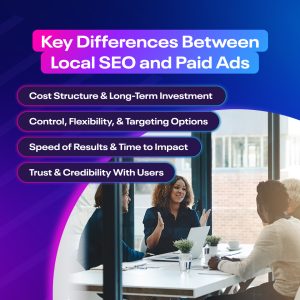
Local SEO is typically an upfront and ongoing investment that builds value over time. Once your rankings improve, you can generate traffic without paying for each click. Paid ads, on the other hand, require continuous spending. While they can produce fast results, costs accumulate quickly and stop delivering once the budget is paused.
Speed of Results and Time to Impact
Paid ads offer immediate visibility, allowing businesses to appear at the top of search results as soon as campaigns go live. Local SEO takes longer to produce results, often requiring several months to see significant improvement. However, once established, SEO can deliver consistent traffic without the same level of ongoing spend.
Trust and Credibility With Users
Users often view organic search results as more trustworthy than paid ads. Ranking well through local SEO can help build credibility and reinforce your authority in the market. While paid ads can still be effective, some users may skip over them in favor of organic listings they perceive as more reliable.
Control, Flexibility, and Targeting Options
Paid ads provide greater control over targeting, allowing businesses to specify location, demographics, interests, and even user behavior. Campaigns can be adjusted quickly based on performance. Local SEO offers less direct control but builds broader visibility across search results, especially for users actively searching for services in your area.
Sustainability and Long-Term ROI
Local SEO is generally more sustainable in the long run. Once your business gains strong visibility, it can continue to generate leads without a direct cost per click. Paid ads require ongoing investment to maintain results. For many businesses, SEO delivers stronger long-term ROI, while paid ads are better suited for short-term growth or targeted campaigns.
Which Delivers Better ROI for Small Businesses?
The answer depends on your business goals, timeline, and resources. Both local SEO and paid ads can deliver strong returns when used correctly, but they serve different purposes. Small businesses often see the best results by aligning their strategy with their immediate needs while also planning for long-term growth.
When Local SEO Delivers Higher ROI
Local SEO tends to deliver higher ROI over time, especially for businesses focused on long-term growth. Once your business ranks well in local search marketing results, you can generate consistent traffic and leads without paying for each click. This makes SEO a cost-effective solution for building sustainable visibility and reducing overall cost per lead.
When Paid Ads Deliver Higher ROI
Paid ads are ideal when businesses need immediate results. If you are launching a new service, entering a competitive market, or running a time-sensitive promotion, PPC can generate traffic and leads quickly. In these situations, the ability to control targeting and messaging can lead to a strong short-term return on investment.
Industry and Competition Considerations
The level of competition in your industry plays a major role in determining ROI. In highly competitive markets, ranking organically through local SEO may take longer, while paid ads may require higher budgets to remain competitive. Businesses should evaluate both options based on how saturated their market is and how aggressively competitors are investing.
Budget Size and Marketing Goals
Your available budget and business objectives will also influence which strategy performs better. Smaller budgets may benefit from investing in local SEO for long-term growth, while larger budgets can support a combination of SEO and paid campaigns. Clearly defining your goals, whether they are immediate leads or sustained visibility, helps guide the right investment.
Combining SEO and Paid Ads for Maximum Impact
For many small businesses, the most effective approach is a combination of both strategies. Paid ads can generate immediate traffic while local SEO builds long-term visibility. Using both together allows businesses to capture short-term opportunities while developing a foundation that continues to produce results over time.
How to Decide the Right Strategy for Your Business
Choosing between local SEO and paid ads comes down to understanding your business needs, resources, and growth timeline. There is no universal answer, which is why taking a strategic approach is important. By evaluating your goals, budget, and market conditions, you can determine the right mix of tactics to support both short-term wins and long-term success.
 Define Your Short-Term vs Long-Term Goals
Start by identifying what you need most right now. If your priority is immediate leads or quick visibility, paid ads may be the better option. If you are focused on building a sustainable presence and reducing long-term acquisition costs, local SEO is often the stronger investment. Many businesses benefit from balancing both based on their timeline.
Evaluate Your Budget and Resources
Your available budget plays a key role in determining your strategy. Paid ads require ongoing spend to maintain results, while local SEO typically involves upfront and ongoing investment that compounds over time. Consider not only your financial resources but also the time and expertise available to manage and optimize your campaigns.
Analyze Your Local Competition
Understanding your competitive landscape helps set realistic expectations. If competitors are heavily investing in paid ads, you may need to allocate budget to remain visible. If the local SEO space is less competitive, there may be an opportunity to gain organic visibility more quickly. Evaluating what others are doing can guide your strategy.
Consider Your Sales Cycle and Customer Behavior
Different industries have different buying cycles. Businesses with longer sales cycles may benefit more from local SEO and content that builds trust over time. Businesses with shorter decision-making processes may see faster results from paid ads. Understanding how your customers research and make decisions will help you choose the right approach.
Test and Optimize Over Time
The most effective strategies are built through testing and continuous improvement. Start with a clear plan, measure performance, and adjust based on results. Over time, you can refine your approach, allocate budget more effectively, and identify which channels deliver the strongest return for your business.
Why a Combined Strategy Often Works Best
For many small businesses, choosing between local SEO and paid ads is not an either-or decision. Each strategy offers unique advantages, and when used together, they can create a more effective and balanced marketing approach. Combining both allows businesses to generate immediate results while also building long-term visibility and reducing reliance on paid traffic over time.
Using Paid Ads to Generate Immediate Leads
Paid ads are an effective way to drive traffic and leads quickly. This makes them especially useful for new businesses, promotions, or filling short-term gaps in lead generation. By targeting specific audiences and keywords, businesses can reach potential customers right when they are actively searching.
Building Long-Term Organic Traffic With SEO
While paid ads deliver fast results, local SEO helps build a sustainable source of traffic over time. As your website and Google Business Profile gain visibility, you can attract consistent leads without paying for each click. This long-term growth helps improve overall marketing efficiency and return on investment.
Retargeting and Funnel Optimization
Combining SEO and paid ads also improves how you move users through the sales funnel. Visitors who find your business through organic search can be retargeted with paid ads, keeping your brand top of mind. This approach helps increase conversions by reconnecting with users who have already shown interest.
Data Sharing Between SEO and PPC Campaigns
Data from both strategies can inform each other. Keywords that perform well in paid campaigns can be used to guide SEO efforts, while organic search data can highlight new opportunities for paid targeting. This shared insight helps businesses refine their messaging and improve overall campaign performance.
Creating a Balanced Marketing Strategy
A combined approach allows businesses to balance short-term gains with long-term growth. Paid ads provide immediate visibility, while SEO builds lasting authority and trust. Together, they create a more resilient strategy that can adapt to changes in competition, budget, and market conditions.
Schedule a Consultation With an Orlando Digital Marketing Agency
Choosing between local SEO and paid ads is an important decision, but the right strategy often depends on your specific goals, industry, and budget. A thoughtful approach that aligns with your business objectives can help you generate stronger results and maximize your return on investment.
Working with an experienced Orlando digital marketing agency can help you evaluate your options, build a tailored search engine optimization strategy, and execute campaigns that drive measurable growth. Whether you need immediate leads, long-term visibility, or a balanced approach that combines both, the right partner can guide you every step of the way.
Schedule a consultation with an Orlando search engine optimization agency today to explore how local SEO and paid advertising can work together to support your business growth!





Talk to a sales agent today to jump start your project.
Call (407) 992-8877