
INSIGHTS
Artificial intelligence is transforming how businesses approach search engine optimization. While much of the conversation has focused on AI-generated content, the real value often comes from how AI improves and optimizes existing content.
AI tools allow businesses to analyze data faster, identify opportunities, and refine content in ways that were previously time-consuming or difficult to scale. From improving keyword targeting to enhancing structure and readability, AI plays a key role in helping content rank higher and deliver better results. Understanding how to use AI for SEO content optimization can give businesses a significant advantage in an increasingly competitive search landscape.
What Is AI’s Role in SEO Content Optimization?
AI’s role in SEO content optimization is to help marketers make smarter, faster, and more data-informed decisions. Instead of manually reviewing every keyword, competitor page, and content gap, AI tools can analyze large amounts of information quickly and identify opportunities for improvement.
For businesses, this means AI can support tasks like keyword research, search intent analysis, content scoring, internal linking suggestions, and readability improvements. It can also help identify outdated content, missing topics, and areas where a page may not fully answer user questions.
However, AI works best as a support tool, not a replacement for strategy. Human oversight is still needed to make sure content is accurate, helpful, aligned with brand voice, and written for real people rather than just algorithms.
Key Ways AI Improves SEO Content
AI has become a valuable tool for improving the effectiveness of SEO content. By analyzing search trends, user behavior, and content performance, AI can identify opportunities that may otherwise be missed. When combined with a strong content strategy, AI helps businesses create more relevant, useful, and search-friendly content that better aligns with both user expectations and search engine requirements.
Keyword Research and Topic Discovery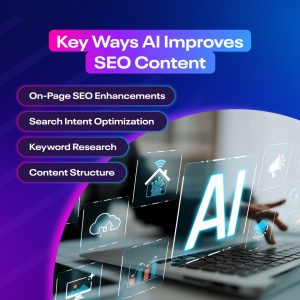
AI can quickly analyze large datasets to uncover valuable keyword opportunities and content topics. Rather than relying solely on manual research, businesses can use AI tools to identify related search terms, trending topics, and emerging opportunities within their industry. This helps marketers build more comprehensive content strategies and target keywords that align with user demand.
Search Intent Optimization
Understanding why someone performs a search is just as important as understanding what they search for. AI can help analyze search intent by identifying patterns in top-ranking content and user behavior. This allows businesses to create content that better matches what users are actually looking for, whether they are seeking information, comparing options, or preparing to make a purchase.
Content Structure and Readability Improvements
Well-organized content is easier for both users and search engines to understand. AI tools can evaluate content structure, suggest heading improvements, identify overly complex sections, and recommend formatting changes that improve readability. These enhancements help keep users engaged while making content more accessible and easier to navigate.
On-Page SEO Enhancements
AI can also assist with many aspects of on-page SEO, including optimizing title tags, meta descriptions, internal links, and keyword placement. By analyzing existing content, AI tools can identify opportunities to strengthen optimization without overusing keywords. This helps improve search visibility while maintaining a positive user experience.
Content Gap Analysis and Competitive Insights
One of AI’s greatest strengths is its ability to compare large amounts of content quickly. Businesses can use AI to identify topics competitors are covering, unanswered questions, and areas where their own content may be lacking. These insights help prioritize content updates and uncover opportunities to create more comprehensive resources that better serve users and improve rankings.
How to Use AI to Optimize Existing Content
AI can be especially helpful when improving content that already exists on your website. Instead of starting from scratch, businesses can use AI tools to identify weak spots, uncover missed opportunities, and refresh pages that are no longer performing well. This makes content optimization more efficient and helps maximize the value of assets you have already created.
Auditing Content Performance with AI Tools
AI tools can review existing pages and identify opportunities for improvement based on rankings, keyword usage, readability, and competitor comparisons. These audits help pinpoint which pages need updates and why they may be underperforming. By using AI to prioritize content improvements, businesses can focus on the pages most likely to drive better results.
Updating Outdated or Underperforming Pages
Older content can lose visibility if information becomes outdated or competitors publish more comprehensive resources. AI can help identify outdated statistics, missing topics, and pages with declining traffic. Once those gaps are clear, marketers can update the content with current information, a stronger structure, and more relevant messaging to improve performance.
Improving Keyword Relevance and Coverage
AI can analyze whether a page fully covers the keywords and related topics users expect to see. This includes identifying missing phrases, semantic keywords, and supporting subtopics that strengthen relevance. Improving keyword coverage helps search engines better understand the content and provides users with a more complete and helpful resource.
Enhancing User Experience and Engagement
Strong SEO content should be easy to read, navigate, and act on. AI can highlight long sections, unclear headings, or areas where users may lose interest. By improving structure, formatting, and calls to action, businesses can create a better user experience that encourages visitors to stay longer and engage more deeply.
Refreshing Content for Better Rankings
Content refreshes are one of the most effective ways to improve existing SEO performance. AI can help suggest new sections, updated keywords, and improved formatting based on current search results. With human review and strategic editing, refreshed content can regain visibility, attract more traffic, and produce stronger results over time.
Best AI Tools for SEO Content Optimization
There are many AI tools available to support SEO content optimization, but the best choice depends on your goals, workflow, and existing marketing stack. Some tools help with writing and structure, while others focus on keyword research, content scoring, technical SEO, or performance tracking. The key is choosing tools that improve efficiency without replacing human strategy, editing, and quality control.
AI Writing and Optimization Tools
AI writing and optimization tools can help create outlines, improve drafts, and align content with SEO best practices. Platforms like Surfer, Jasper, and similar tools analyze top-ranking pages, suggest keyword usage, and recommend content improvements. These tools are helpful for speeding up production, but human review is still needed to ensure accuracy, originality, and brand alignment.
Keyword and Research Tools
Keyword and research tools help identify topics, search trends, and opportunities for content growth. AI-powered platforms can analyze search volume, competition, related terms, and user intent more quickly than manual research alone. This helps marketers prioritize the keywords most likely to attract qualified traffic and support a stronger overall SEO strategy.
Technical SEO and Performance Tools
Technical SEO tools help identify issues that may prevent content from ranking well. These tools can flag slow page speed, broken links, crawl errors, missing metadata, and mobile usability concerns. AI can help prioritize fixes based on potential impact, allowing businesses to improve both content performance and the overall user experience.
Content Scoring and Analysis Platforms
Content scoring platforms evaluate how well a page aligns with SEO best practices and competitor benchmarks. They may review keyword coverage, readability, heading structure, word count, and topical depth. While these scores can provide helpful guidance, they should not be treated as the only measure of quality. Strong content still needs clear messaging and real value for readers.
Choosing the Right Tools for Your Workflow
The right AI tools should support your team’s process rather than complicate it. Before investing in a platform, consider what you need most, such as faster research, better optimization, technical audits, or content performance insights. A strong workflow combines AI efficiency with human strategy, ensuring your content remains useful, accurate, and aligned with business goals.
Limitations of AI in SEO Optimization
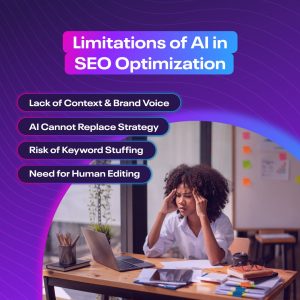
AI can accelerate and improve SEO content optimization, but it still has clear limitations. These tools are best used to support decision-making, not replace it entirely. Without human direction, AI may miss important context, overuse keywords, or produce recommendations that do not align with your brand, audience, or larger business goals.
 AI Cannot Replace Strategy or Expertise
AI can analyze data and suggest improvements, but it cannot fully understand your business objectives, competitive positioning, or customer relationships. SEO strategy requires experience, judgment, and context. Human experts are needed to decide which recommendations matter, how they fit into the broader marketing plan, and how to prioritize changes for the best results.
Risk of Over-Optimization or Keyword Stuffing
AI tools may recommend adding keywords or related phrases too frequently to improve rankings. If followed blindly, this can lead to unnatural copy that feels repetitive or forced. Search engines prioritize helpful content written for users, so optimization should improve clarity and relevance without sacrificing readability or trust.
Lack of Context and Brand Voice
AI can mimic tone, but it does not truly understand your brand identity, audience expectations, or industry nuances. Without human editing, content may sound generic or disconnected from your messaging. Strong SEO content should feel consistent with your brand while still answering user needs clearly and effectively.
Need for Human Editing and Oversight
Even strong AI recommendations need review. Human editors ensure content is accurate, readable, and aligned with search intent. They can also catch errors, refine flow, and add original insight that AI may miss. This oversight is what turns automated suggestions into polished, trustworthy content that supports long-term SEO performance.
How to Combine AI and Human SEO for Best Results
The best SEO results come from blending AI’s efficiency with human strategy. AI can quickly analyze data, identify opportunities, and streamline repetitive tasks, while human experts provide context, creativity, and judgment. When used together, they create a smarter optimization process that improves content performance without sacrificing quality, accuracy, or brand integrity.
Use AI for Insights and Efficiency
AI is especially useful for speeding up research and analysis. It can identify keyword opportunities, evaluate competitor content, flag optimization gaps, and suggest improvements faster than manual review. This allows SEO teams to work more efficiently and focus their energy on strategy, execution, and creative decision-making.
Apply Human Strategy and Creativity
Human expertise is what turns AI insights into meaningful action. A strategist can decide which recommendations align with business goals, audience needs, and brand positioning. Creativity also plays a major role in making content engaging, original, and memorable, which is something AI cannot fully replicate on its own.
Focus on User Experience and Value
SEO content should always be created for people first. AI can help improve structure and keyword relevance, but humans ensure the content is useful, clear, and easy to navigate. Prioritizing user experience helps keep visitors engaged, builds trust, and increases the likelihood that content will convert.
Continuously Test and Improve Content
SEO optimization is an ongoing process. Use AI tools to monitor rankings, engagement, and content performance over time, then apply human judgment to decide what needs to change. Regular testing and updates help keep content relevant, competitive, and aligned with evolving search behavior.
Schedule a Consultation With a Search Engine Optimization Agency
AI can accelerate, optimize, and scale SEO content, but the best results still come from pairing technology with human strategy. With the right approach, your content can better match search intent, improve rankings, and create more value for your audience. If you’re ready to strengthen your SEO strategy with AI-supported insights and expert guidance, schedule a consultation with an Orlando search engine optimization agency that can help you turn smarter content into measurable growth.







Talk to a sales agent today to jump start your project.
Call (407) 992-8877