
INSIGHTS
Local SEO continues to be one of the most effective ways for businesses to attract nearby customers, generate qualified leads, and increase visibility in search results. As consumers increasingly rely on Google Search and Google Maps to find products and services, strong local search visibility can have a direct impact on business growth.
Despite the importance of local SEO, many businesses still make common mistakes that limit their ability to rank well and compete effectively. From incomplete Google Business Profiles to inconsistent business information and neglected reviews, these issues can prevent businesses from reaching potential customers when it matters most.
Why Local SEO Matters More Than Ever in 2026
Local SEO continues to evolve, but its importance has only increased. Consumers rely heavily on local search to find businesses, compare options, and make purchasing decisions. At the same time, competition for visibility in local search results continues to grow. Businesses that invest in local SEO are better positioned to attract nearby customers and capture valuable search traffic.
Consumers Continue to Rely on Local Search
Whether someone is looking for a restaurant, contractor, healthcare provider, or professional service, local search is often the first step. Searches that include location-based intent frequently lead to phone calls, website visits, and in-person interactions. Businesses that appear prominently in local search results are more likely to earn those opportunities.
Google Business Profile Remains a Key Ranking Factor
A well-optimized Google Business Profile continues to play a major role in local search visibility. Accurate business information, online reviews, categories, photos, and regular updates all contribute to how Google evaluates and displays local businesses. Companies that actively manage their profiles often have a stronger presence in both Google Maps and local search results.
Local Competition Is Increasing
More businesses are investing in local SEO than ever before. As competition grows, simply having a website and a Google Business Profile is no longer enough. Businesses must consistently optimize their online presence, build credibility through reviews, and create relevant local content to remain competitive and maintain strong local search rankings.
SEO Mistake #1: Incomplete or Unoptimized Google Business Profile
Your Google Business Profile is often the first impression potential customers have of your business in search results. Yet many businesses either leave important sections incomplete or fail to actively manage their profiles. An unoptimized profile can limit visibility, reduce engagement, and make it harder for customers to find accurate information about your business.
Missing Business Information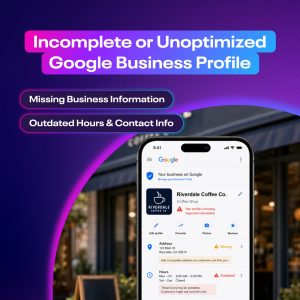
One of the most common local SEO mistakes is failing to complete every section of a Google Business Profile. Missing details such as services, business categories, website links, attributes, or business descriptions can make it harder for Google to understand your business and match it with relevant searches. A fully completed profile provides stronger signals that can improve local search visibility.
Outdated Hours and Contact Information
Nothing frustrates potential customers more than finding incorrect business information online. Outdated hours, old phone numbers, or inaccurate addresses can lead to missed opportunities and negative experiences. Regularly reviewing and updating your profile ensures customers can reach you when they need to and helps maintain trust with both users and search engines.
SEO Mistake #2: Inconsistent NAP Information Across the Web
NAP stands for Name, Address, and Phone Number, and consistency across online directories is a foundational element of local SEO. Search engines use this information to verify that your business is legitimate and trustworthy. When your business details vary from one listing to another, it can create confusion for both customers and search engines, potentially hurting your local search rankings.
Why Name, Address, and Phone Consistency Matters
Search engines rely on consistent business information to validate your company across the web. If your address is formatted differently, your phone number changes between listings, or your business name varies from platform to platform, it can weaken trust signals. Consistent NAP information helps improve local search visibility and makes it easier for customers to find and contact your business.
How to Audit and Correct Listings
Regularly auditing your business listings is essential for maintaining accuracy. Start by reviewing major platforms such as Google Business Profile, Yelp, Bing Places, industry directories, and local business listings. Look for outdated addresses, duplicate listings, incorrect phone numbers, or inconsistent naming conventions. Correcting these discrepancies helps strengthen your local SEO strategy and ensures customers receive accurate information wherever they find your business online.
SEO Mistake #3: Ignoring Customer Reviews
Customer reviews are one of the most influential factors in local SEO and consumer decision-making. Reviews help build trust, provide valuable social proof, and signal credibility to search engines. Businesses that neglect review management often miss opportunities to improve local search visibility and convert potential customers.
Not Actively Requesting Reviews
Many satisfied customers are willing to leave a review, but they often need to be asked. Businesses that rely solely on organic reviews may struggle to build enough review volume to stay competitive. Creating a consistent process for requesting reviews after a positive customer experience can help strengthen your online reputation and improve local search rankings over time.
Failing to Respond to Reviews
Responding to reviews shows customers that you value feedback and actively engage with your audience. This applies to both positive and negative reviews. Thanking customers for positive feedback reinforces relationships, while professionally addressing concerns demonstrates accountability and customer service. Regular review responses can help build trust and contribute to a stronger local online presence.
SEO Mistake #4: Targeting the Wrong Local Keywords
Choosing the right keywords is essential for local SEO success. Many businesses make the mistake of targeting broad, highly competitive terms that may generate traffic but do not always attract nearby customers. Local keyword optimization should focus on the way people actually search for products or services in their area, including city names, neighborhoods, service areas, and “near me” intent.
Broad Keywords vs Local Intent Keywords
Broad keywords may attract a large audience, but they often lack the location-based intent needed to drive local leads. For example, a keyword like “roof repair” is much less specific than “roof repair in Orlando” or “roof repair near Winter Park.” Local intent keywords help connect your business with customers who are actively searching for services nearby.
Optimizing for Service Areas
Businesses that serve multiple locations should create content that reflects those service areas. This may include dedicated location pages, localized service descriptions, and references to nearby neighborhoods or communities. Optimizing for service areas helps search engines understand where your business operates and increases your chances of appearing in relevant local searches.
SEO Mistake #5: Neglecting Local Content Creation
Many businesses focus on technical SEO and directory listings while overlooking one of the most effective ways to improve local search visibility: creating local content. Search engines want to connect users with businesses that are relevant to their area, and localized content helps establish that connection. Without it, businesses may struggle to build authority and relevance within their target market.
Building Local Relevance Over Time
Local content helps reinforce your connection to the communities you serve. Publishing articles, location pages, community updates, local case studies, or content related to regional events gives search engines more context about your geographic relevance. Over time, this content can strengthen local search signals, expand keyword visibility, and help your business become a more trusted resource within your market.
SEO Mistake #6: Poor Mobile Experience
A strong mobile experience is no longer optional for local SEO. Most local searches now happen on smartphones, often when users are actively looking for a nearby business, service, or solution. If your website is difficult to use on mobile devices, you risk losing potential customers before they ever contact your business.
Mobile Searches Dominate Local Discovery
Whether someone is searching for a restaurant, contractor, attorney, or healthcare provider, mobile devices are often the primary way they find local businesses. Users expect websites to load quickly, display properly on smaller screens, and make it easy to call, get directions, or submit a form. A poor mobile experience can lead to missed opportunities and lower engagement.
Slow Load Times Hurt Rankings
Website speed is a critical factor for both user experience and search performance. Slow-loading pages can increase bounce rates and reduce the likelihood that visitors will stay long enough to convert. Google also considers page experience when evaluating search rankings, making site speed an important component of any local SEO strategy. Fast, mobile-friendly websites are better positioned to rank well and capture local traffic.
SEO Mistake #7: Failing to Track Local SEO Performance
Many businesses invest time and resources into local SEO but never measure whether their efforts are producing results. Without tracking performance, it is difficult to know which strategies are working, where opportunities exist, and what changes are needed. Monitoring key local SEO metrics helps businesses make informed decisions and continually improve their visibility.
Not Monitoring Rankings
Local search rankings can change over time as competitors optimize their websites, Google updates its algorithms, and search behavior evolves. Businesses that fail to monitor rankings may miss important shifts in visibility. Regularly tracking keyword performance helps identify trends, uncover opportunities, and ensure your local SEO strategy stays on the right path.
Ignoring Traffic and Conversion Metrics
Higher rankings alone do not guarantee business growth. It is equally important to track how local search traffic translates into meaningful actions such as phone calls, form submissions, direction requests, and website conversions. Analyzing traffic and conversion metrics helps businesses understand the true impact of their local SEO efforts and measure return on investment more accurately.
Mistake #8: Overlooking Local Link Building
Backlinks remain an important ranking factor in local SEO, yet many businesses overlook opportunities to earn links from relevant local sources. Local link building helps establish authority, credibility, and geographic relevance. Links from community organizations, local publications, business associations, and industry partners can strengthen your online presence and improve local search visibility.
Building Authority Within Your Market
Local backlinks signal to search engines that your business is recognized and trusted within the community it serves. Sponsoring local events, partnering with organizations, contributing to community initiatives, and earning coverage from local media outlets can all help build authority. Over time, these signals contribute to stronger local search rankings and increased visibility among nearby customers.
SEO Mistake #9: Ignoring Technical SEO Fundamentals
While local SEO often focuses on content, reviews, and business listings, technical SEO remains a critical foundation. Technical issues can prevent search engines from properly crawling, understanding, and ranking your website. Even the strongest local SEO strategy can be limited if technical problems are left unresolved.
Broken Links and Crawl Issues
Broken links create a poor user experience and can make it more difficult for search engines to navigate your website. Crawl issues may prevent important pages from being indexed altogether. Regular website audits can help identify and fix these problems, ensuring both users and search engines can access your content efficiently.
Missing Metadata and Structured Data
Title tags, meta descriptions, and structured data provide valuable information that helps search engines understand your content. Missing or poorly optimized metadata can reduce visibility in search results, while structured data can help highlight important business details such as location, services, reviews, and operating hours. Proper implementation strengthens your overall local SEO strategy and improves search performance.
SEO Mistake #10: Treating Local SEO as a One-Time Project
One of the biggest misconceptions about local SEO is that it can be completed once and then left alone. In reality, local SEO requires ongoing attention and optimization. Search trends change, competitors continue to improve their online presence, and Google regularly updates how local results are ranked. Businesses that stop investing in local SEO often see their visibility decline over time.
Search Algorithms Continue to Change
Google regularly updates its search algorithms to improve the quality and relevance of local search results. Factors that influence rankings today may evolve as search behavior, technology, and user expectations change. Businesses that stay informed and adapt their strategies are better positioned to maintain strong local search visibility.
Long-Term Local SEO Success Requires Consistency
Strong local SEO results are built through consistent effort over time. Regularly updating your Google Business Profile, managing reviews, creating local content, monitoring performance, and maintaining technical SEO all contribute to long-term success. Businesses that treat local SEO as an ongoing strategy rather than a one-time task are more likely to achieve sustainable growth and maintain a competitive advantage.
How to Build a Stronger Local SEO Strategy in 2026
Avoiding common mistakes is only part of the equation. To improve local search visibility and stay competitive, businesses need a proactive strategy that focuses on optimization, consistency, and ongoing improvement. A strong local SEO strategy developed by an Orlando search engine optimization agency will help ensure your business remains visible to nearby customers actively searching for your products or services.
Start With a Local SEO Audit
A comprehensive local SEO audit provides a clear picture of your current performance. Review your Google Business Profile, business listings, website content, reviews, local rankings, and technical SEO factors. Identifying gaps and opportunities helps establish priorities and creates a roadmap for improvement.

Prioritize High-Impact Improvements
Not all SEO tasks deliver the same results. Focus first on improvements that can have the greatest impact on visibility and conversions, such as optimizing your Google Business Profile, correcting NAP inconsistencies, improving website speed, and strengthening your review strategy. Addressing these foundational elements often produces meaningful gains quickly.
Maintain Consistency Across Channels
Consistency strengthens trust with both search engines and potential customers. Ensure your business information, branding, messaging, and service offerings are accurate and aligned across your website, social media profiles, directories, and Google Business Profile. Consistent information helps reinforce your local search signals and improve credibility.
Focus on User Experience and Relevance
Successful local SEO is ultimately about providing value to users. Create content that answers local search intent, make it easy for visitors to contact your business, and ensure your website performs well across devices. Search engines increasingly reward websites that deliver positive user experiences and relevant information.
Measure, Refine, and Improve Continuously
Local SEO is an ongoing process that benefits from regular analysis and optimization. Monitor rankings, website traffic, Google Business Profile insights, and conversion metrics to understand what is working. Use that data to refine your strategy, identify new opportunities, and continue improving your local search performance over time.
Schedule a Consultation With a Search Engine Optimization Agency
Local SEO can be one of the most effective ways to generate qualified leads, but even small mistakes can limit your visibility and make it harder for potential customers to find your business. From optimizing your Google Business Profile and improving website performance to building local authority and tracking results, every part of your strategy plays a role in your success.
Working with an experienced Orlando search engine optimization (SEO) agency can help you identify missed opportunities, correct issues that may be holding you back, and develop a local SEO strategy designed for long-term growth. Schedule a consultation today to learn how your business can improve local search rankings, attract more customers, and stay competitive in an increasingly crowded market with our search engine optimization services.







Talk to a sales agent today to jump start your project.
Call (407) 992-8877