
INSIGHTS
The way people search for information online is changing. Instead of scrolling through traditional search results, more users are turning to AI-powered tools like ChatGPT and Google’s AI Overviews to get answers, compare options, and research businesses. These tools can summarize information from multiple sources, giving users helpful responses without requiring them to visit every website.
For businesses, this creates new opportunities to reach potential customers, but it also changes how websites need to approach search visibility. Optimizing your website for AI search results involves more than targeting keywords. It requires clear, useful content, a strong technical foundation, and information that search systems can easily discover and understand.
How AI Search Results Work in 2026
Traditional search engines typically provide a list of relevant webpages for users to explore. AI-powered search takes a different approach by generating responses that bring together information from multiple sources. Understanding how these experiences work can help businesses adapt their SEO strategies and improve their opportunities to appear in AI-generated answers.
Can You Optimize Your Website to Appear in AI Search Results?
Yes, businesses can take steps to improve their chances of appearing in AI-generated search results. While there is no guaranteed way to get your website cited by AI search tools, many established SEO practices can help make your content more accessible, understandable, and useful to these systems.
AI Search Optimization Builds on Traditional SEO
AI search optimization doesn’t require abandoning your existing SEO strategy. Many of the same practices that help websites perform well in traditional search, including creating helpful content, improving website structure, and building credibility, also support AI search visibility. Rather than treating AI SEO as an entirely separate strategy, businesses should focus on strengthening their existing SEO foundation while adapting their content to how people search using AI tools.
Search Engines Need to Discover and Understand Your Content
Before your website can appear in AI-powered search results, the systems retrieving information need to be able to access and interpret your content. Clear website navigation, logical page structures, internal linking, and appropriate crawling settings can help make important information easier to discover. Technical issues that prevent search engines or relevant AI search crawlers from accessing your pages may limit your visibility, regardless of how useful your content is.
Clear, Helpful Information Makes Content Easier to Reference
AI search tools often generate responses to specific questions, making clear and relevant website content especially valuable. Pages that directly answer common questions, explain important concepts, and provide useful supporting details may be easier for these systems to identify as relevant sources. Focus on providing accurate information that addresses what your audience wants to know rather than adding keywords or creating content solely to attract AI citations.
No Optimization Strategy Can Guarantee AI Citations
Even a well-optimized website won’t necessarily appear in every relevant AI-generated answer. Different platforms use their own systems to retrieve, evaluate, and reference information, and the sources they select can vary depending on the search query. Businesses should approach AI search optimization as an opportunity to improve visibility over time, not a guaranteed placement strategy. Tracking relevant mentions, referral traffic, and conversions can help evaluate its potential impact.
How to Structure Website Content for AI Search
How you organize your website content can influence how easily search engines and AI-powered tools understand the information you provide. A clear content structure helps these systems identify relevant topics, recognize important details, and connect your pages to specific search queries. It also makes your website easier for visitors to navigate and find the answers they need.
Answer Important Questions Clearly and Directly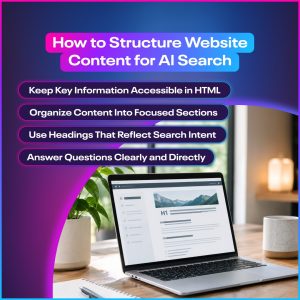
People often use AI search tools to ask specific questions rather than entering a few keywords. Your website content should address these questions with clear, straightforward answers. For example, a service page might explain what a service includes, who it’s for, and what customers can expect. Providing direct answers before expanding on the details makes your content more useful to readers and easier for search systems to interpret.
Use Descriptive Headings That Reflect Search Intent
Headings help organize your content and communicate what each section covers. Instead of relying on vague or overly creative headings, use descriptive language that reflects the questions and topics your audience is searching for. For example, “How Much Does Website Design Cost?” provides more context than “Understanding Your Investment.” Clear headings make pages easier to scan and help search systems identify relevant information.
Organize Content Into Focused, Easy-to-Understand Sections
Long blocks of text covering several unrelated topics can make information harder to find. Break your content into focused sections that address one main idea at a time. Use short paragraphs, descriptive subheadings, and lists when appropriate to improve readability. This structure helps visitors locate specific answers while making it easier for search systems to understand how different pieces of information relate to one another.
Include Relevant Details That Support Your Answers
A short answer may address a question, but supporting details can make your content more useful and informative. Include relevant examples, explanations, specifications, or firsthand insights that help readers understand the topic. For businesses, this might mean explaining your process, outlining service options, or addressing common customer concerns. Providing meaningful context helps distinguish your content from generic information available elsewhere online.
Keep Important Information Accessible in HTML
Important website content should be available as readable text within your page’s HTML rather than appearing exclusively in images, videos, or elements that require complex interactions to display. While visual content can improve the user experience, search systems may have difficulty accessing information that isn’t available in a crawlable format. Using properly structured HTML headings, paragraphs, and links helps make your content more accessible to both visitors and search engines.
Create Content That AI Search Systems Can Trust
AI search optimization isn’t just about how your content is structured. The quality and credibility of the information you provide also matter. Creating accurate, helpful content that demonstrates your business’s expertise can strengthen your online presence and make your website a more useful resource for both potential customers and search systems.
Demonstrate Relevant Experience and Expertise
Your website should reflect the knowledge and experience behind your business. This might include explaining your processes, highlighting your team’s qualifications, or sharing examples of projects you’ve completed. Providing details that demonstrate firsthand experience helps visitors evaluate your credibility and gives search systems more context about your expertise. Focus on showing what your business knows rather than simply claiming to be an industry leader.
Support Important Claims With Reliable Sources
When your content includes statistics, research findings, or technical information, support those claims with credible sources whenever possible. Linking to reputable industry publications, official documentation, or original research helps readers verify the information you’re sharing. Accurate sourcing also provides additional context that can strengthen the overall reliability of your content, particularly when discussing complex or frequently changing topics.
Publish Original Insights and Useful Information
Repeating information that’s already widely available online doesn’t give readers much reason to choose your website as a resource. Look for opportunities to share original insights based on your experience, customer questions, or industry knowledge. Case studies, practical examples, and detailed explanations of your services can make your content more valuable and help distinguish it from generic articles covering the same topics.
Keep Your Website Content Accurate and Updated
Outdated information can create confusion for potential customers and reduce the usefulness of your content. Regularly review important pages to make sure service details, pricing, business information, and industry references remain accurate. For topics that change frequently, such as technology or regulations, updates may be especially important. Maintaining current information helps ensure visitors and search systems encounter details that accurately represent your business.
Make Your Business Information Easy to Verify
Your website should clearly identify who your business is, what you offer, and how customers can contact you. Include accurate business details, relevant service areas, and information about your team or company background where appropriate. Keeping these details consistent across your website and other online profiles can help establish credibility and make it easier for customers and search systems to understand your business.
Technical SEO Practices That Support AI Search Visibility
Even the most helpful website content may struggle to appear in AI search results if search systems cannot access or understand it. Technical SEO helps ensure your website is properly structured, accessible, and functioning as intended. Addressing these foundational elements can support your visibility in both traditional and AI-powered search experiences.
Make Sure Important Pages Can Be Crawled and Indexed
Search engines need to discover and access your website’s pages before they can include them in their search indexes. Check that important pages aren’t accidentally blocked from crawling or marked with a noindex directive. Tools like Google Search Console can help identify indexing issues and show which pages are eligible to appear in Google Search. Keep in mind that different AI search platforms may use different methods to retrieve website information.
Review Robots.txt and Search Engine Access
Your website’s robots.txt file provides instructions about which areas of your site automated crawlers can access. Incorrect settings can prevent search engines or AI search crawlers from reaching important content. Review your configuration to make sure you’re allowing access to the crawlers relevant to your visibility goals. It’s also important to understand that different AI platforms use different crawlers, and access for search purposes may be separate from access for AI model training.
Use Structured Data to Clarify Page Content
Structured data, often implemented through schema markup, provides search engines with additional information about your website’s content. Depending on the page, this might include details about your business, services, products, articles, or frequently asked questions. Using relevant, accurate structured data can help search engines interpret your content more effectively. However, schema markup does not guarantee that your website will appear in AI-generated answers or receive citations.
Maintain Clear Internal Linking and Website Architecture
A well-organized website makes it easier for visitors and search engines to discover related information. Group relevant pages logically, use descriptive navigation labels, and include internal links that connect supporting content to important service pages. For example, a blog article answering a common customer question might link to the service page where visitors can learn more. Clear website architecture helps search systems understand how your content is organized and which pages cover related topics.
Improve Mobile Usability and Website Performance
A website that loads slowly or is difficult to navigate on mobile devices can create a frustrating experience for visitors. Optimize images, reduce unnecessary scripts, and make sure your layouts adapt to different screen sizes. Tools like Google PageSpeed Insights can help identify performance issues that need attention. While website speed alone won’t guarantee AI search visibility, maintaining a fast, accessible website supports your broader SEO strategy and user experience.
How to Optimize for Conversational and Question-Based Searches
People often interact with AI search tools differently than they do with traditional search engines. Instead of entering a few keywords, they may ask detailed questions, describe specific problems, or request recommendations based on their needs. Creating content that reflects these natural conversations can help your website address relevant searches and provide more useful answers.
Understand How People Ask Questions in AI Search
Traditional searches might use a short phrase like “Orlando web design,” while an AI search query could be more specific, such as “What should I look for when hiring a web design agency in Orlando?” Understanding these differences can help you identify questions your audience is likely to ask. Review customer inquiries, search data, and common concerns to find opportunities to create content that answers those questions naturally.
Address Specific Customer Problems and Needs
Rather than creating content that only describes your products or services, focus on the problems your customers are trying to solve. For example, a web design agency might explain why a website isn’t generating leads or how to improve its conversion rate. Addressing these concerns helps potential customers understand their options while giving AI search systems relevant information to reference when responding to similar questions.
Build Content Around Related Questions and Topics
Customers often have several questions before making a decision. Organizing related topics into helpful content can give them a more complete understanding of your services. For example, a business offering SEO services might cover how SEO works, what affects search rankings, and how to measure results. Connecting these topics through relevant internal links also helps visitors and search engines understand how the information relates.
Include Context That Helps Explain Your Services
AI search queries can include specific details about a user’s location, budget, industry, or needs. Providing relevant context on your website can help clarify when your services may be a good fit. Include information about who you serve, the problems you address, your service areas, and what customers can expect. These details make your content more informative without requiring visitors to search through multiple pages for answers.
Avoid Keyword Stuffing and Unnatural Writing
Repeating the same keywords throughout a page doesn’t make the content more helpful to readers or guarantee better AI search visibility. Focus on writing clear, natural explanations that answer questions thoroughly and accurately. Use relevant terminology where it makes sense, but avoid forcing keywords into every heading or paragraph. Content written for real people is generally easier to understand and provides a stronger foundation for both traditional SEO and AI search optimization.
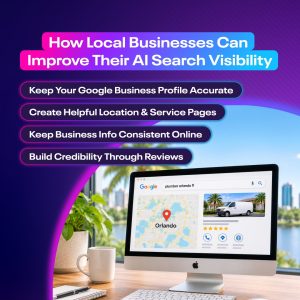
How Local Businesses Can Improve Their AI Search Visibility
For local businesses, appearing in relevant AI search results can create additional opportunities to connect with nearby customers. When people use AI tools to find services, compare businesses, or ask for recommendations in their area, accurate business information and locally relevant content can help improve visibility. Many of the same practices that support local SEO can also strengthen your presence in AI-powered search experiences.
 Keep Your Google Business Profile Accurate
Your Google Business Profile provides important information about your business, including your location, hours, contact details, and services. Keeping this information accurate and updated helps customers find reliable details when searching for businesses in their area. A complete profile can also support your visibility across Google Search and Maps, including relevant AI-powered search experiences. Regularly review your profile to make sure it reflects your current business information.
Maintain Consistent Business Information Online
Your business name, address, phone number, and other important details should remain consistent across your website, online directories, and business listings. Conflicting information can create confusion for potential customers and make it harder for search systems to identify accurate details about your business. Review your listings periodically, especially after changing locations, updating contact information, or expanding your services.
Create Helpful Location and Service Pages
Dedicated location and service pages can help search engines understand where your business operates and what you offer. Each page should provide useful, location-specific information rather than repeating the same generic content with different city names. Include details about available services, the communities you serve, and relevant customer needs. This approach can help your website address more specific local searches while giving visitors information that supports their decisions.
Build Credibility Through Reviews and Relevant Mentions
Customer reviews and mentions of your business on reputable websites can help establish credibility and strengthen your local online presence. Encourage satisfied customers to share honest feedback and respond professionally to reviews when appropriate. Mentions from local organizations, industry publications, and community websites can also provide additional information about your business. While these signals don’t guarantee AI search citations, they can help customers evaluate your reputation and reinforce your business’s online presence.
Answer Questions Specific to Your Service Area
Local customers often have questions that depend on where they live or work. They may want to know whether you serve their neighborhood, how quickly you can schedule an appointment, or whether local conditions affect the services you provide. Addressing these questions on relevant website pages can make your content more useful to nearby customers. It also provides context that may help AI search systems connect your business with location-specific queries.
Common AI Search Optimization Mistakes to Avoid
As businesses adapt their SEO strategies for AI-powered search, it’s important to avoid practices that may limit their effectiveness. Some approaches focus too heavily on new technology while overlooking the fundamentals of creating a useful, accessible website. Understanding these common mistakes can help you build a more sustainable strategy for improving your search visibility.
Treating AI SEO as Completely Separate From Traditional SEO
AI search optimization shouldn’t replace your existing SEO efforts. Many of the factors that support traditional search visibility, including helpful content, technical accessibility, and a well-organized website, also contribute to AI search optimization. Creating an entirely separate strategy can lead to duplicated efforts and missed opportunities. Instead, focus on strengthening your SEO foundation while making adjustments that help your content address AI-powered searches.
Publishing Large Amounts of Generic AI-Generated Content
AI writing tools can help businesses brainstorm topics, organize information, and draft content, but publishing large amounts of generic material without proper review can reduce its usefulness. Content that repeats existing information without offering additional value is unlikely to stand out. Prioritize quality over quantity by incorporating original insights, verifying important details, and ensuring every page addresses a genuine customer need.
Focusing on Keywords Without Answering User Questions
Targeting relevant keywords remains important, but simply including them throughout your content isn’t enough. AI search users often ask detailed questions and expect specific, useful answers. If your pages focus on keyword placement without addressing what visitors actually want to know, they may miss opportunities to appear in relevant searches. Build your content around search intent and provide clear explanations that help readers make informed decisions.
Adding Schema Markup Without Improving the Content
Structured data can help search engines better understand certain details about your webpages, but it cannot compensate for incomplete or low-quality content. Adding schema markup to a page that lacks useful information won’t automatically improve its visibility in AI search results. Make sure your content is accurate, relevant, and well-organized before implementing structured data that appropriately describes what’s already on the page.
Expecting Immediate Results or Guaranteed Citations
AI search optimization is an ongoing process, and improvements may take time to influence your website’s visibility. Even well-optimized pages aren’t guaranteed to appear in AI-generated responses, and results can vary across platforms and search queries. Avoid strategies that promise specific placements or immediate results. Instead, monitor performance over time, evaluate which content attracts relevant visitors, and continue refining your approach based on measurable outcomes.
Schedule a Consultation With a Digital Marketing Agency
As AI-powered search continues to evolve, businesses need an SEO strategy that supports visibility across both traditional search engines and emerging AI platforms. From creating helpful content to improving technical performance and strengthening your online presence, the right approach can help your website reach more potential customers.
At Brandcoders, a leading Orlando digital marketing agency, we help businesses improve their online visibility through strategic SEO, website optimization, and content marketing. Our team focuses on building long-term strategies that attract relevant traffic and turn website visitors into leads.
Are you ready to improve your website’s search visibility? Contact us today to schedule a consultation and learn how we can help your business grow through strategic digital marketing services.







Talk to a sales agent today to jump start your project.
Call (407) 992-8877