
INSIGHTS
AI-powered search is changing how people look for information online. Instead of relying only on traditional search results, users can now get direct answers through tools like Google AI Overviews and ChatGPT.
For businesses, that means visibility is no longer just about rankings. Your content also needs to be clear, credible, and useful enough to be surfaced in AI-generated results. The good news is that many of the same SEO fundamentals still matter, but the way we think about them is shifting.
What Is AI Search?
AI search uses artificial intelligence to understand what someone is looking for and provide a more direct response to their question. Rather than simply matching a query to a list of webpages, these experiences can summarize information, answer follow-up questions, and help users explore a topic in a conversational way.
How AI Search Differs From Traditional Search Results
Traditional search typically presents a ranked list of webpages that users can visit to find an answer. AI search can bring information from those sources directly into the search experience. This means someone may be able to compare options, learn about a topic, or narrow down a decision without first clicking through several websites.
Google AI Overviews and AI-Powered Search Experiences
Google has incorporated generative AI directly into Search through features such as AI Overviews. For certain searches, users may see an AI-generated response above or alongside traditional results, with links to supporting sources. This creates another place where businesses and publishers can potentially earn visibility beyond a standard organic listing.
ChatGPT and Conversational Search Platforms
Conversational platforms like ChatGPT allow users to search differently. Someone can ask a detailed question using natural language and then continue the conversation with follow-up questions. For businesses, this creates opportunities to be discovered as users research options, compare solutions, or seek recommendations.
How AI Generates Answers From Multiple Sources
AI search experiences may use information from multiple webpages and other available sources to build a response. Instead of relying on a single page to answer every part of a question, the system can synthesize relevant information and provide links or citations to supporting sources. This makes clear, specific, well-supported content increasingly important for search visibility.
Why Users Are Changing the Way They Search
People do not always want to sort through multiple webpages to piece together an answer. AI search can make it easier to ask longer, more specific questions and refine the response as they go. As users become more comfortable with this approach, businesses need to consider how their content can remain visible whether someone searches with a few keywords or starts a conversation with an AI platform.
How AI Search Is Changing Organic Visibility
For years, organic visibility was largely measured by a website’s ranking in search results. AI search adds another layer. Businesses now have to consider whether their content and brand can appear in the answers people receive, even when a traditional organic listing is not the first thing they see.
Search Results Are Becoming Answers, Not Just Links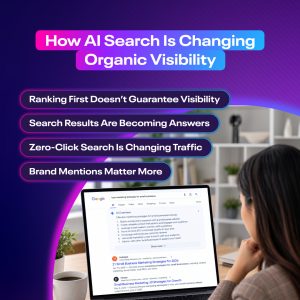
Search engines increasingly provide information directly on the results page. With AI-generated responses, users may receive an explanation that addresses much of their question before they visit a website. This puts more emphasis on creating content that provides clear, useful information that search platforms can understand and reference.
Ranking First Does Not Guarantee the Same Visibility
A top organic ranking is still valuable, but it may compete for attention with AI-generated answers and other search features. Depending on the query, users could interact with those results before reaching the traditional organic listings. Businesses should therefore look at search visibility more broadly instead of treating the number-one ranking as the only goal.
AI Can Surface Sources Beyond the Top Organic Results
The sources included in an AI-generated answer do not necessarily mirror the traditional organic rankings for the same query. This can create additional opportunities for relevant content to gain exposure. A page may provide particularly useful information for one part of a question and be surfaced even when it does not hold the highest traditional ranking.
Zero-Click Searches Are Changing Website Traffic
Not every search ends with a website visit. If someone gets the information they need directly from a search result or an AI-generated response, they may not need to click at all. This makes traffic alone a less complete measure of SEO performance and puts greater importance on the quality and intent of the visits a website receives.
Brand Mentions and Citations Are Becoming More Valuable
Being referenced within an AI-generated answer can introduce your business to someone during the research process, even if they do not immediately visit your website. As AI search grows, businesses should pay closer attention to where their brands are mentioned, which pages are being cited, and how accurately AI platforms represent what they offer.
Does Traditional SEO Still Matter?
Absolutely! AI search may be changing how information is presented, but it has not made traditional SEO irrelevant. Many of the practices that help search engines find, understand, and evaluate a website also support visibility in AI-powered search experiences. The goal is to build on those fundamentals rather than replace them.
Search Engines Still Need Crawlable, Optimized Websites
Before your content can appear in search results, search engines need to discover and understand it. Clear site architecture, accessible pages, descriptive headings, and well-optimized content make the process easier. If important information is difficult to find or crawl, your visibility can suffer regardless of how useful the content may be.
Keywords Still Provide Context and Relevance
Keywords remain useful because they help clarify what a page is about and how it relates to what people are searching for. The difference is that optimization should focus less on repeating exact phrases and more on covering the topic naturally. Relevant terminology, related questions, and clear explanations can provide a stronger context for both traditional and AI search.
Technical SEO Helps AI Systems Access Your Content
Technical problems can limit how effectively search platforms access and interpret a website. Issues involving indexing, internal links, page speed, mobile usability, or site structure can create unnecessary barriers. Maintaining a technically sound website gives your content a better foundation for discovery across different search experiences.
Backlinks and Authority Continue to Build Credibility
Links from reputable, relevant websites remain valuable for SEO. They can help establish a website’s authority while introducing your brand to audiences beyond your own channels. Earning quality backlinks and mentions can also strengthen your broader online presence as AI-powered search systems evaluate information from across the web.
Strong SEO Creates the Foundation for AI Visibility
Optimizing for AI search does not require abandoning the work businesses are already doing for SEO. Helpful content, strong technical performance, relevant backlinks, and a well-organized website continue to matter. The opportunity is to strengthen those fundamentals while considering the additional ways people may discover your business through AI-powered search.
What Makes Content More Useful for AI Search?
AI search puts a greater emphasis on content that clearly addresses what users want to know. Businesses should focus on creating pages that are easy to understand, genuinely useful, and supported by information readers can trust.
Answer Specific Questions Clearly
Give users a clear answer without making them dig through unnecessary information first. Headings based on real customer questions can help organize content around specific needs, while concise explanations make the information easier to understand. Additional detail can then provide context for readers who want to learn more.
Demonstrate Firsthand Experience and Expertise
Original experience can make your content more useful than pages that simply repeat information already available elsewhere. Share insights from your work, explain processes you regularly use, or provide examples based on real situations when appropriate. This gives readers information grounded in actual experience while helping distinguish your content from generic summaries.
Cover Topics Beyond Surface-Level Definitions
A definition may answer the initial question, but users often want to know what that information means for them. Expand important topics by addressing common concerns, practical considerations, and related questions. More complete coverage can make a page useful for a wider range of searches without adding information simply to increase its length.
Use Clear Headings and Logical Content Structure
Organize pages so both readers and search systems can easily follow the information. Descriptive headings should communicate what each section covers, while related ideas should be grouped together logically. A clear structure also helps users scan the page and quickly find the information most relevant to their question.
Support Claims With Reliable Sources and Original Data
When your content includes statistics, research findings, or claims that require evidence, support them with credible sources. Businesses that have their own useful data can also incorporate original findings, surveys, case studies, or research where appropriate. These details add substance to the content and give other websites a reason to reference it.
Keep Important Information Accurate and Current
Outdated information can quickly make otherwise useful content less reliable. Review pages periodically for old statistics, changed recommendations, broken links, outdated services, or information that no longer reflects your business. This is especially important for topics that evolve quickly, including technology, regulations, pricing, and industry trends.
How Businesses Can Optimize for AI Search
Optimizing for AI search starts with understanding how your existing digital presence performs and identifying opportunities to improve it. Rather than creating an entirely separate strategy, businesses can strengthen their current SEO efforts while making their content and brand easier to understand across different search experiences.
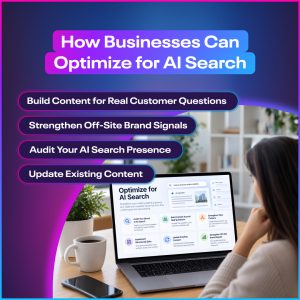 Audit How Your Brand Appears in AI Search Results
Search for your business, services, products, and common customer questions across AI-powered search experiences. Pay attention to whether your brand appears, which sources are referenced, and whether the information presented about your business is accurate. This can help identify gaps in your content or online presence that may be limiting visibility.
Build Content Around Real Customer Questions
Your customers can provide some of the best ideas for useful content. Look at the questions people ask during sales conversations, consultations, support requests, and other interactions. Creating pages that address those questions clearly can help you cover topics that reflect how people actually research your products or services.
Strengthen Topic Clusters and Internal Linking
Instead of publishing isolated articles, develop groups of related content around the subjects most relevant to your business. Internal links can connect those resources and help establish relationships between topics. They also make it easier for visitors to continue exploring when they need more information about a particular service or question.
Implement Relevant Structured Data
Structured data gives search engines additional context about certain information on a webpage. Depending on the content, businesses may use appropriate schema markup for details such as organizations, products, events, or articles. Structured data does not guarantee inclusion in AI-generated answers, but it can help search engines better understand eligible content.
Update Existing Content Instead of Only Publishing More
You may already have pages with strong potential that simply need attention. Review existing content for outdated information, unanswered questions, thin sections, or opportunities to add firsthand expertise. Improving a relevant page can sometimes be more valuable than publishing another article that covers a similar topic.
Strengthen Off-Site Brand Signals
Your website is only one part of your online presence. Relevant backlinks, media coverage, industry mentions, business profiles, and other third-party references can help establish a stronger footprint across the web. Focus on earning legitimate mentions from sources connected to your industry, market, or community, rather than generating mentions solely for volume.
Schedule a Consultation With a Search Engine Optimization Agency
AI search is creating new ways for customers to discover businesses, but strong SEO fundamentals remain an important part of earning that visibility. The key is to build a strategy that works across traditional search and adapts to how AI-powered platforms find, understand, and surface information.
At Brandcoders, we help businesses strengthen their search presence through technical search engine optimization services, content strategy, and AI search optimization. Schedule a consultation with our Orlando search engine optimization agency to prepare your website for the next generation of search.




Talk to a sales agent today to jump start your project.
Call (407) 992-8877