
INSIGHTS
Generative AI is transforming how businesses approach content creation and search engine optimization. What once required weeks of planning, writing, and editing can now be accelerated with AI tools that generate content in minutes. As a result, the volume of content online is growing rapidly, and competition for visibility is increasing just as quickly.
In 2026, success in SEO is no longer about simply producing more content. It’s about creating content that is relevant, accurate, and aligned with user intent. Generative engine optimization plays a major role in this shift, helping businesses scale their efforts while also raising the standard for quality. Understanding how to use AI effectively, while maintaining human oversight, is key to building a sustainable SEO content strategy.
What Is Generative AI?
Generative AI in SEO refers to the use of artificial intelligence tools to create, optimize, and enhance content designed to rank in search engines. These tools analyze large amounts of data to generate text, suggest keywords, and structure content in ways that align with search engine best practices. As AI continues to evolve, it is becoming an increasingly important part of modern SEO workflows.
How Generative AI Tools Create Content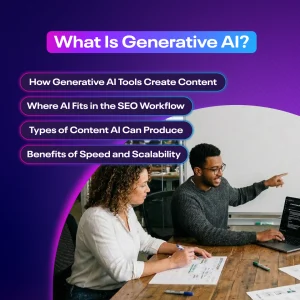
Generative AI tools use machine learning models trained on vast datasets to produce human-like text. By analyzing patterns in language and search behavior, these tools can generate blog posts, landing pages, and other content based on prompts or keywords. This allows marketers to quickly create drafts and explore multiple content ideas in less time.
Types of Content AI Can Produce
AI can generate a wide range of content types, including blog articles, product descriptions, service pages, email campaigns, and social media posts. It can also assist with metadata, headlines, and content outlines. This versatility makes AI a valuable tool for businesses looking to scale content across multiple channels.
Where AI Fits in the SEO Workflow
AI is most effective when used as part of a larger content process. It can assist with keyword research, content outlines, and initial drafts, allowing teams to move faster during the early stages of production. Human input is still essential for refining messaging, ensuring accuracy, and aligning content with brand voice and strategy.
Benefits of Speed and Scalability
One of the biggest advantages of generative AI is its ability to produce content quickly. Businesses can create more content in less time, test different approaches, and respond to trends more efficiently. This scalability helps companies remain competitive in a digital landscape where content demand continues to grow.
Common Misconceptions About AI Content
There is a common belief that AI-generated content cannot rank or lacks quality. In reality, search engines evaluate content based on usefulness, relevance, and user experience. AI can support high-quality content creation when used correctly, but relying solely on automation without strategy or editing can lead to poor results.
How Generative AI Is Changing SEO Content Strategy
Generative AI is not just speeding up content creation, it’s reshaping how businesses think about SEO strategy as a whole. In 2026, the focus has shifted from producing large volumes of content to creating content that is intentional, relevant, and aligned with user needs. AI allows marketers to move faster, but strategy is what determines whether that content actually performs.
Shift From Volume to Quality and Intent
Search engines have become more advanced in evaluating content quality and relevance. Instead of rewarding sheer volume, they prioritize content that directly answers user questions and provides real value. This means businesses must focus on search intent optimization and ensure every piece of content serves a clear purpose.
Faster Content Production Cycles
AI has dramatically reduced the time it takes to move from idea to published content. Businesses can now research topics, generate outlines, and produce drafts much faster than before. This allows for quicker testing, faster iteration, and the ability to respond to trends or changes in search behavior in real time.
Greater Focus on Search Intent and Relevance
With more content being published than ever, relevance has become a key differentiator. AI tools can help identify patterns in search queries and user behavior, but it still requires human strategy to ensure content truly matches what users are looking for. Aligning content with intent is now essential for ranking and engagement.
Content Personalization at Scale
Generative AI makes it easier to tailor content for different audiences, industries, or stages of the buyer journey. Businesses can create variations of content that speak to specific user needs without starting from scratch each time. This level of personalization helps improve engagement and makes content more effective.
Increased Competition in Search Results
As AI lowers the barrier to content creation, more businesses are producing SEO content at a faster rate. This increase in competition means that simply publishing content is no longer enough. To stand out, businesses need stronger messaging, clearer positioning, and a more strategic approach to content development.
The Benefits of Using AI for SEO Content
When used correctly, generative AI can significantly improve efficiency and performance in content marketing. It supports faster workflows, better organization, and more data-driven decision-making. For businesses looking to scale their SEO efforts, AI has become a valuable tool for increasing output without sacrificing direction.
Speeding Up Research and Content Creation
AI tools can quickly analyze large amounts of data to identify relevant topics, keywords, and content opportunities. This reduces the time spent on manual research and allows marketers to focus more on strategy and execution. Faster research leads to quicker content production and more opportunities to compete in search.
Improving Content Optimization and Structure
AI can help structure content in a way that aligns with SEO best practices. This includes organizing headings, suggesting keyword placement, and ensuring readability. A well-structured article improves both user experience and search engine visibility, making it easier for content to rank and perform.
Supporting Keyword Research and Topic Clustering
Generative AI tools can identify related keywords and suggest content clusters that support a broader SEO strategy. This helps businesses build authority around specific topics and improve internal linking. A well-organized content structure makes it easier for search engines to understand and rank your site.
Scaling Content Across Channels
AI makes it easier to repurpose and adapt content for different platforms. A blog post can be transformed into social media content, email campaigns, or landing page copy. This allows businesses to extend the reach of their content while maintaining consistency across channels.
Reducing Production Costs
By automating parts of the content creation process, AI can help reduce the time and resources needed to produce high-quality content. While human oversight is still necessary, businesses can operate more efficiently and allocate resources toward strategy, creativity, and optimization.
The Risks and Limitations of AI-Generated Content
While generative AI offers clear advantages, it also comes with important limitations. Businesses that rely too heavily on automation without proper oversight can run into issues with quality, accuracy, and search performance. Understanding these risks is essential for building a balanced and effective SEO content strategy.
Lack of Original Thought and Brand Voice
AI-generated content is based on patterns from existing data, which means it can sometimes lack originality. Without human input, content may feel generic or fail to reflect a unique brand voice. Businesses that want to stand out in search results need content that offers distinct perspectives and authentic messaging.
Risk of Duplicate or Generic Content
Because AI tools pull from widely available information, there is a risk of producing content that feels repetitive or similar to what already exists online. This can make it harder to differentiate your brand and may reduce the effectiveness of your SEO efforts, especially in competitive industries.
Potential SEO Penalties if Misused
Search engines prioritize helpful, user-focused content. If AI is used to produce large volumes of low-quality or keyword-stuffed content, it can negatively impact rankings. Businesses need to ensure that all content meets quality standards and aligns with current SEO best practices.
Inaccuracies and Hallucinations
AI tools are not always accurate and may generate incorrect or misleading information. Without proper fact-checking, this can damage credibility and trust with your audience. Human review is essential to verify information and ensure content is reliable and accurate.
Over-Reliance on Automation
Relying too heavily on AI can lead to a lack of strategic direction. Content should be guided by business goals, audience needs, and market insights, not just generated for the sake of output. A balanced approach ensures that AI supports strategy rather than replacing it.
How to Combine AI and Human SEO for Best Results
The most effective SEO strategies in 2026 are not built on AI alone or human effort alone. They combine the speed and efficiency of generative AI with the strategic thinking and creativity of experienced marketers. When these two approaches work together, businesses can produce high-quality content at scale without sacrificing relevance or performance.
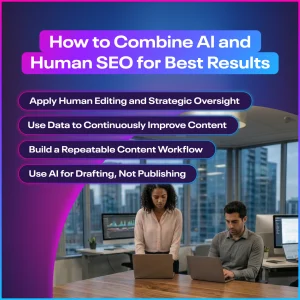 Use AI for Drafting, Not Publishing
AI is best used as a starting point rather than a final product. It can generate outlines, drafts, and ideas quickly, giving teams a strong foundation to build on. However, publishing content without review can lead to inaccuracies or generic messaging. Human input ensures the final content meets quality and brand standards.
Apply Human Editing and Strategic Oversight
Editing is where content truly comes to life. Human review helps refine tone, improve clarity, and ensure alignment with business goals. Strategic oversight also ensures that content fits into a broader SEO plan, rather than existing as isolated pieces without direction or purpose.
Optimize for Search Intent and User Experience
AI can help identify keywords and structure content, but humans are needed to ensure it genuinely satisfies user intent. This means creating content that answers questions clearly, provides useful insights, and delivers a smooth reading experience. Strong user experience is a key factor in both engagement and rankings.
Use Data to Continuously Improve Content
Combining AI with performance data allows businesses to refine their content over time. By analyzing metrics such as engagement, rankings, and conversions, marketers can identify what is working and adjust accordingly. This continuous improvement process helps maximize the value of both AI-generated and human-created content.
Build a Repeatable Content Workflow
A structured workflow helps teams consistently produce high-quality content. This may include using AI for research and drafting, followed by human editing, optimization, and final review. Establishing clear processes ensures efficiency while maintaining the standards needed for long-term SEO success.
Schedule a Consultation With an Orlando SEO Agency
Generative AI is transforming how content is created, but success still depends on strategy, execution, and continuous improvement. Businesses that take a thoughtful approach to search engine optimization can use AI to enhance their efforts while maintaining the quality needed to compete.
Working with an experienced Orlando generative engine optimization (GEO) agency can help you build a content strategy that balances innovation with performance. From AI-assisted content creation to full SEO planning and optimization, the right partner can help you stay ahead in a rapidly changing digital landscape. Schedule a consultation today to see how your business can use AI and SEO together to drive meaningful growth.





Talk to a sales agent today to jump start your project.
Call (407) 992-8877